Emirates Stadium rubbish clearance after match day pickups
Posted on 29/05/2026
Emirates Stadium rubbish clearance after match day pickups: a practical local guide
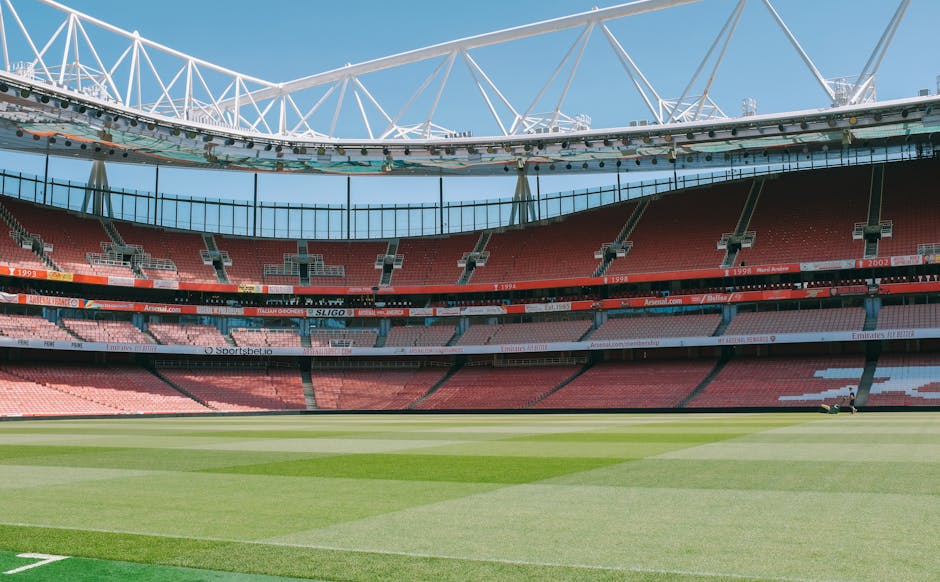
Match days around Emirates Stadium are brilliant for atmosphere, but they also create a familiar after-effect: cups under benches, takeaway boxes on pavements, overflowing bags near busy routes, and that one corner where litter seems to multiply overnight. Emirates Stadium rubbish clearance after match day pickups is the practical response to that mess. It keeps streets safer, helps businesses open cleanly the next day, and stops a lively evening from turning into a lingering headache.
If you are a venue manager, event organiser, landlord, local business owner, or simply someone trying to plan for a busy crowd, the key question is not just can the rubbish be cleared? It is how quickly, how safely, and how thoroughly. This guide explains what match day clearance usually involves, what to expect from a reliable service, where problems tend to appear, and how to make the whole process smoother. We also cover useful comparisons, a realistic example, and a checklist you can use straight away.
For wider support beyond stadium-adjacent clearances, you may also find our services overview useful, especially if your needs go beyond one-off pickup and into regular waste management. And if you want a straightforward next step, you can always start with our contact page.
Why Emirates Stadium rubbish clearance after match day pickups Matters
Stadium areas move fast. Before kick-off, the streets feel busy but orderly. After the final whistle, the scene changes. Footfall spills out at once, bins fill up quickly, and litter gets pushed into gutters, doorways, loading bays, and nearby public spaces. A good clearance service is not about making things look neat for vanity. It is about restoring normality in a tight window.
That matters for several reasons. First, there is the obvious visual impact. Nobody wants to open a cafe, shop, or office the next morning to find the frontage still covered in drink containers and food waste. Second, there is hygiene. Food debris attracts pests and creates smells that can hang around longer than people expect, especially on warmer evenings. Third, there is safety. Broken bottles, sharp packaging, and slippery litter are not just untidy; they can cause avoidable accidents.
There is also a reputation angle, and truth be told, that is often underestimated. A clean street signals that an area is cared for. For venues, residents, and businesses around Highbury, that can shape how people feel about returning after a match day. One messy pavement does not sound like much, but layered over time it becomes noticeable. The difference between a rushed tidy-up and a proper rubbish clearance can be the difference between a street feeling battered and a street feeling ready again.
For people who live or work nearby, this is not just a football issue. It is part of everyday local life. If you are new to the area, our pieces on living in Highbury and exploring Highbury as a neighbourhood give more context on how the area balances buzz with day-to-day livability.
How Emirates Stadium rubbish clearance after match day pickups Works
In practice, match day clearance is usually a coordinated pickup rather than a simple "turn up and collect" job. The timing, access route, volume, and type of waste all matter. A reliable team will often work to a brief that includes where the rubbish is likely to build up, what needs separating, and how quickly the area must be handed back.
The process normally starts with assessment. That may be a quick site call, photos, or a discussion about the expected load. Some pickups are light and routine. Others, especially after major fixtures or hospitality-heavy events, need more vehicles, more labour, or a staggered collection plan. It is rarely glamorous work. It is more about timing and judgement than anything else.
Then comes the collection itself. Bags, loose litter, cardboard, packaging, cups, and general event waste are gathered from agreed points. If there are bulky items mixed in, such as damaged furniture, broken barriers, or overflow from temporary setups, those may need separate handling. For larger events, it can make sense to combine this with a broader service such as junk removal in Highbury or even rubbish collection in Highbury if the pickup is part of a recurring clean-up pattern.
Finally, the waste is sorted for disposal or recycling where appropriate. That part is easy to overlook, but it is central to a responsible service. Cardboard, glass, mixed general waste, and food-contaminated material may all need different treatment. If a service simply loads everything into the back of a truck and hopes for the best, that is not really a proper match day pickup. It is just removal with a nicer label.
A small but important detail: access around the stadium can be tight. Narrow roads, live traffic, pedestrians, and time-specific restrictions can make a simple collection more complex than it looks on paper. The best teams plan around those realities instead of pretending they do not exist.
Key Benefits and Practical Advantages
When match day rubbish is removed promptly, the benefits ripple out beyond a clean pavement. Some are obvious. Others show up quietly over time.
- Cleaner streets faster: visible litter is reduced before it becomes embedded, scattered, or blown into side roads.
- Better first impressions: local businesses, residents, and visitors see an area that feels managed rather than neglected.
- Lower hygiene risk: food waste and drinks are removed before smells and pest issues develop.
- Reduced operational stress: staff do not have to spend the first hour of the next day doing emergency tidying.
- More predictable opening routines: shops, offices, and hospitality venues can get back to normal more quickly.
- Improved recycling outcomes: cleaner separation often makes recovery and recycling more realistic.
For some clients, the main advantage is speed. For others, it is discretion. Nobody wants a noisy, clumsy clearance crew blocking entrances at the wrong moment. A good service works around the reality of the street, not against it. That sounds basic, but in a busy match day environment, basic done well is worth a lot.
There is also a financial angle, though not in a dramatic way. Prompt clearance can reduce the need for repeat callouts, ad hoc cleaning, or avoidable damage caused by rubbish being left too long. A spill left overnight can become a sticky patch the next morning, and sticky patches have a habit of turning into complaints. Small things, big annoyance. We have all seen that.
If your needs overlap with larger property or business clean-outs, services like office clearance in Highbury or house clearance in Highbury can also help when match day waste is only one part of a broader clearance plan.
| Approach | Best for | Strengths | Limitations |
|---|---|---|---|
| One-off pickup | Single match, small event spillover, quick reset | Fast, simple, flexible | Can be less cost-efficient if repeated often |
| Scheduled match day clearance | Repeat fixtures, hospitality areas, regular crowd waste | Predictable, easier planning, cleaner handover | Needs advance coordination |
| Bulk waste clearance | Overflow, broken fixtures, mixed bulky items | Useful for bigger clean-ups | May require more labour and vehicle space |
| Skip hire | Ongoing site work or staged loading | Good for longer projects | Less agile in tight, high-footfall areas |
Who This Is For and When It Makes Sense
This kind of clearance is not only for stadium operators. In fact, the people who benefit most are often the ones dealing with the knock-on effect of crowds rather than the event itself.
It makes sense for:
- bars, pubs, cafes, and takeaway shops near the route of crowd movement
- property managers responsible for shared entrances or communal fronts
- event organisers hosting private functions on busy match days
- office buildings that need a clean and safe handover the next morning
- landlords preparing a property for viewings or new tenants after a busy weekend
- local contractors managing temporary structures, signage, or event equipment
It also makes sense when the waste is not huge in volume, but awkward in shape or timing. A few bags of mixed rubbish may sound trivial. Add them to a packed street, a narrow access point, and a hard deadline before opening time, and suddenly it is not trivial at all.
If you are trying to figure out whether you need a lightweight pickup or something more substantial, the difference often comes down to the mix of waste and how quickly the area needs to be back in use. For heavier post-work or mixed debris situations, our builders waste clearance service can be relevant too, especially when temporary event setups leave behind timber, packing materials, or broken fixtures.
And if you are weighing that decision against other options, skip hire in Highbury can work well for longer projects, but it is not always the easiest choice for fast-turnaround stadium-adjacent clearances. More on that below.
Step-by-Step Guidance
Here is a practical way to approach an Emirates Stadium rubbish clearance after match day pickups job without making it more complicated than it needs to be.
- Map the waste hotspots. Look at entrances, nearby pavements, loading bays, side streets, and any place where bins tend to overflow.
- Estimate the volume honestly. A tidy-looking pile can still hide more waste than you expect. Be conservative if the area is busy.
- Separate waste types where possible. Cardboard, glass, food waste, and bulky items may need different handling.
- Check access and timing. Can a vehicle stop safely? Is there a best window before commuters, deliveries, or footfall spike again?
- Decide on the collection method. One-off pickup, scheduled service, or something more suitable for recurring events?
- Confirm safety arrangements. Make sure the team can work without blocking exits or creating hazards. If your site has special concerns, review insurance and safety guidance before the job begins.
- Book enough capacity. Underbooking is the most common headache. It usually means delay, double handling, or a second visit.
- Follow through on recycling and disposal. Ask how the waste will be processed, not just removed.
A good rule of thumb: if the waste can be cleared in one smooth movement, it probably should be. If it needs to be layered, staged, or safely managed in sections, say so early. Last-minute surprises are expensive in time, and occasionally in patience too.
For pricing conversations, our pricing and quotes page is a sensible place to begin, especially if you are comparing a routine pickup against a larger clear-out.
Expert Tips for Better Results
Over time, a few practical habits make a real difference.
First, plan around crowd flow rather than the clock alone. A pickup scheduled "after the match" sounds tidy on paper, but the actual best time might be 20 minutes later, once people have dispersed and access is easier. That little gap can save a lot of wasted movement.
Second, separate visible waste from hidden waste. The obvious litter gets attention first, but the trouble often sits just out of sight: behind planters, in kerb channels, under rails, or beside bins. A proper sweep matters. It really does.
Third, think in layers. If your waste stream includes hospitality packaging, drinks containers, food debris, and some bulky items, don't assume one approach covers everything neatly. A mixed plan is usually more effective than trying to force the whole job into one category.
Fourth, keep communication simple. The site contact, the access point, the collection priority, and the deadline should be clear. Not a rambling message, not a mystery novel. Just the useful bits.
Fifth, use the right local service for the broader need. If the clearance is part of a larger property refresh, a loft empty-out, or a furniture removal job, it may be more efficient to combine tasks. Services such as furniture disposal in Highbury, loft clearance in Highbury, and garage clearance in Highbury can sometimes fit the same planning window.
A small local observation: after a big fixture, the street can look tidy from one angle and chaotic from another. Turn the corner, and there it is again - the bags, the wrappers, the leftover clutter. So the real test is not whether the front looks acceptable. It is whether the whole route feels properly reset.
Common Mistakes to Avoid
Most problems with post-match rubbish clearance are completely avoidable. The issue is usually not bad intent; it is rushed planning.
- Underestimating the volume: crowd waste grows fast, especially around exits and food points.
- Leaving collection too late: rubbish sits, spreads, and becomes harder to remove.
- Mixing everything together: recycling opportunities disappear when waste is not separated properly.
- Ignoring access constraints: a vehicle plan that looks good in theory may fail on a busy street.
- Not confirming the handover point: crews waste time if they are unsure where to load or where to start.
- Using the wrong service type: a general pickup may not be enough if bulky items or mixed event debris are involved.
- Forgetting the next day: the real goal is not just removal, but a clean, safe morning-after result.
One slightly awkward but common mistake is assuming that a "quick sweep" and a proper clearance are the same thing. They are not. A quick sweep can improve appearances. A proper clearance restores usability. There is a difference, and it shows up fast when the first cafe opens or the first delivery arrives.
If you are unsure which service line fits your situation, it can help to review the broader rubbish clearance in Highbury option first, then narrow it down from there. That is often the simplest route.
Tools, Resources and Recommendations
You do not need a warehouse full of kit to manage a good post-match pickup, but the right basics make the job cleaner and quicker.
- Heavy-duty bags and sacks: useful for general litter, food waste, and mixed lightweight rubbish.
- Gloves and protective gear: especially important where broken glass, sharp packaging, or wet debris is involved.
- Hand trolleys or sack trucks: practical when waste needs moving over short distances without repeated lifting.
- High-visibility clothing: not optional in busy streets; visibility matters.
- Container or vehicle plan: helps prevent unnecessary rehandling.
- Sorting area: even a small temporary staging point can improve separation and loading speed.
From a service perspective, look for a provider that explains timing clearly, communicates access needs in plain English, and does not overpromise on impossible turnarounds. That last one is easy to miss. If someone sounds too certain about every scenario, they probably haven't done many busy match days.
Our about us page explains a bit more about how we approach local collections, while the recycling and sustainability page gives a clearer picture of how waste handling should be approached responsibly.
For readers who manage multiple event clean-ups, having a repeatable planning template is more useful than improvising each time. A short written checklist, a contact name, a pickup window, and a note on access can save a lot of back-and-forth. Basic? Yes. Effective? Also yes.
Law, Compliance, Standards, or Best Practice
Any rubbish clearance service in the UK should work in line with normal waste-handling duties, safety expectations, and local operational common sense. Without getting buried in legal detail, the important point is this: waste should be collected, transported, and disposed of responsibly, by people who understand the practical and regulatory side of the job.
For match day pickups around a high-footfall area like Emirates Stadium, best practice usually includes:
- safe handling of sharp or contaminated materials
- clear separation of recyclable and general waste where practical
- careful vehicle loading and secure transport
- attention to public safety and access routes
- appropriate care around business entrances, residents' access, and emergency routes
If you are commissioning a service, it is sensible to ask whether the team is properly insured and how safety is managed on site. That is not being fussy. It is just sensible. Our insurance and safety information is there to help with exactly those conversations.
There is also a trust angle around working practices more broadly. Transparent terms, clear payment handling, and accessible communication all matter. If you want to review those basics before booking, the pages on payment and security and terms and conditions are useful references.
Best practice, in plain terms, means the job is done safely, waste is handled properly, and the street is left ready for normal use. Nothing flashy. Just properly done.
Options, Methods, or Comparison Table
Choosing the right method depends on timing, volume, and how messy the waste mix is. Here is a practical comparison.
| Method | Speed | Best use case | Notes |
|---|---|---|---|
| Manual bagged pickup | Very fast | Light litter, cups, packaging, small spills | Good for tidy routes and narrow access |
| Vehicle-assisted clearance | Fast to moderate | Heavier loads or multiple collection points | Needs a workable stop location |
| Scheduled recurring collection | Predictable | Repeat match days, hospitality areas, nearby businesses | Usually the easiest for consistency |
| Skip hire | Slower to set up | Longer jobs with continuous waste generation | Less suited to quick same-night reset work |
For most match day contexts, manual pickup or vehicle-assisted clearance is the most practical choice. Skip hire is useful in the right setting, but in a tight urban area it can be a bit of a blunt instrument. Not wrong, just not always the neatest fit.
If your waste stream is mostly lightweight but repeated, a planned waste removal service may offer a better long-term answer than treating every fixture as a one-off emergency.
Case Study or Real-World Example
Imagine a small row of businesses near a busy route back from Emirates Stadium: one cafe, one convenience shop, and a property entrance used by residents upstairs. After the match, the area looks manageable at first glance. Then the delivery bins start filling, the pavement gets scattered with cartons, and a few loose items drift into the corner by the doorway.
The business owners could each deal with their own bit separately, and sometimes that is exactly what happens. But in practice, a coordinated pickup is cleaner. The waste is collected in one pass, the frontages are cleared together, and the morning handover becomes simpler. The cafe opens without embarrassment. Residents do not have to step around a soggy pile of packaging. The shop can put its front display back without working around litter.
That sort of job is not dramatic. No one is going to write a song about it. But it is the kind of practical local service that quietly keeps an area functioning well. If you live nearby, or manage premises nearby, you already know how much that matters when a busy evening rolls into an early next day.
For businesses and landlords who deal with mixed property upkeep, related reading like quick local pickup in Highbury Fields and hosting parties in Highbury can help you plan around noisy, high-footfall periods without letting the place slide into clutter.
Practical Checklist
Use this checklist before booking or arranging a post-match clearance.
- Identify the exact collection area
- Estimate the waste type and volume
- Check access for people and vehicles
- Confirm the best pickup time window
- Separate recycling where possible
- Note any bulky or awkward items
- Make sure entrances and exits stay clear
- Ask how waste will be disposed of
- Confirm safety and insurance details
- Have a clear point of contact on the day
Quick takeaway: the smoother the planning, the less disruptive the clearance. A few minutes of preparation can save a whole lot of back-and-forth later. And yes, that is usually where the real saving is.
Conclusion
Emirates Stadium rubbish clearance after match day pickups is really about keeping the local area usable, safe, and respectable once the crowds have gone home. It helps businesses open cleanly, supports residents, reduces hygiene issues, and stops small problems from becoming bigger ones overnight. The best results come from clear timing, proper waste sorting, safe access planning, and a service that understands the pressure of busy London streets.
If you are comparing options, start with the actual waste you need removed, then think about timing, access, and whether the job is a one-off or part of a regular pattern. That usually points you toward the right solution without overcomplicating things. And if you are still weighing up the details, a quick conversation is often enough to make the next step obvious.
Get a free quote today and see how much you can save.
Small job, big weekend, or somewhere in between - when the streets are clear again, the whole neighbourhood feels a bit easier to breathe in. That counts for a lot.


 Tipper Van - Rubbish Removal and Builders Waste Disposal Prices in Highbury, N5
 Luton Van - Rubbish Removal and Builders Waste Disposal Prices in Highbury, N5